
When children return on different days: a 2028 care plan
Make a separate attendance and care line for each child rather than marking the whole household back at school. In the published ACT 2028 calendar, new students start on Tuesday 8 February and continuing students return Wednesday 9 February. That creates a day when one child may attend while another still needs a daytime arrangement, subject to each school’s cohort instructions.
Worked ACT example: two children in different published cohorts
| Date | Published attendance | Care decision |
|---|---|---|
| Monday 7 February 2028 | Staff-only day for both example cohorts | Confirm arrangements for both children |
| Tuesday 8 February 2028 | New students start; continuing students return the next day | Arrange daytime cover for B alongside A’s actual school hours |
| Wednesday 9 February 2028 | Both cohorts attending, subject to school instructions | Check both start/finish times and any before/after-school care |
Confirm these details child by child
| Question | Evidence to keep | Why it matters |
|---|---|---|
| First attendance day | School’s dated notice and the official calendar | Term opening and student attendance can differ |
| Actual start and finish | School’s cohort or orientation instructions | A first day may not follow a familiar routine |
| Care eligibility | Provider’s written age/year-level conditions | A sibling’s existing place does not establish eligibility |
| Specific date and service | Booking confirmation and venue | Ordinary before/after-school care is not necessarily an all-day programme |
| Collection and backup | School/provider collection procedure and agreed adult | One adult may need to cover two locations |

Start with attendance, not the term heading
The ACT example comes from the official 2026–30 calendar, rechecked on 25 November 2026. It distinguishes a staff-only day, new students and continuing students. The example does not decide which cohort an individual school places a child in; confirm that with the school.
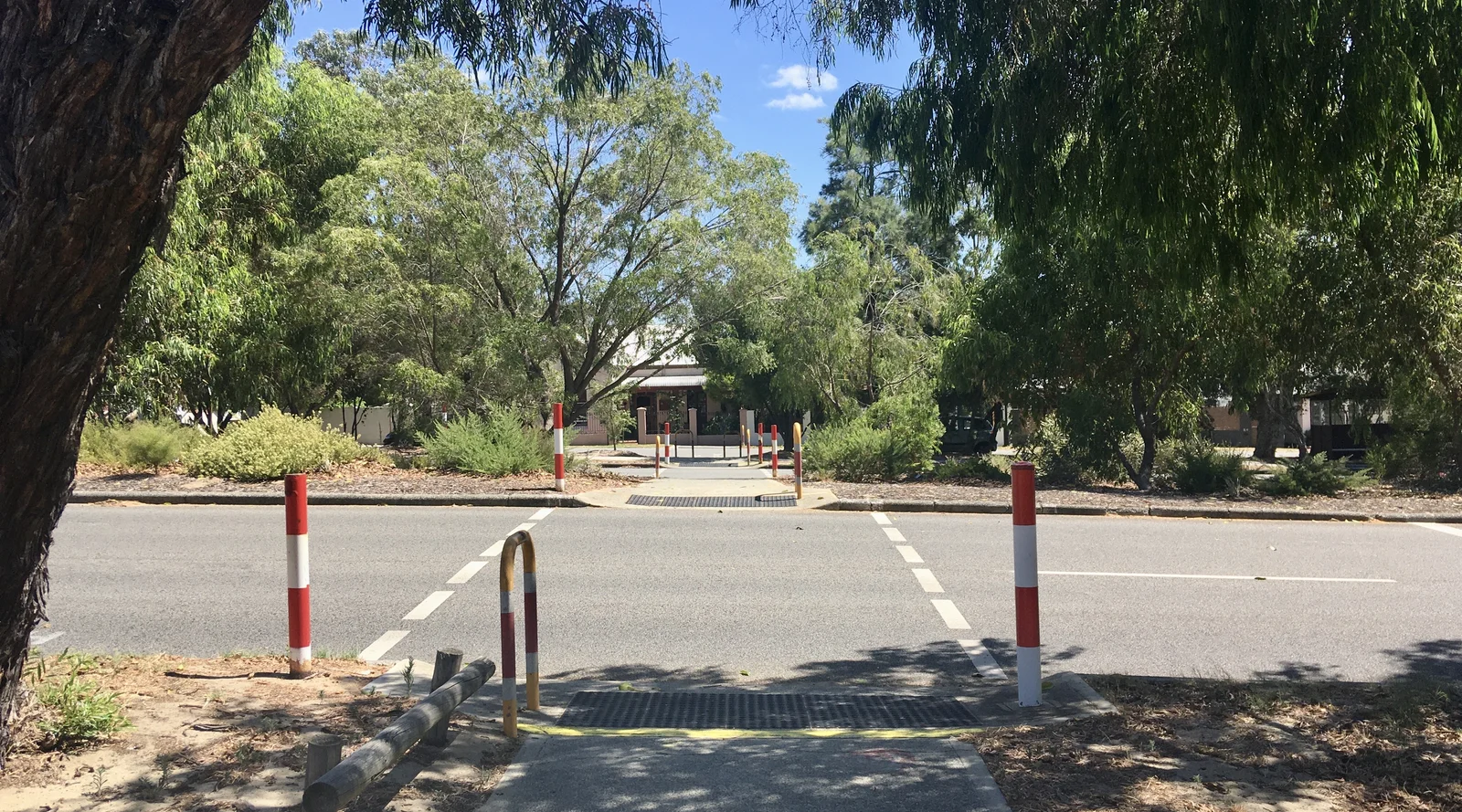
The photograph shows a Western Australian school crossing and is general arrival context, not an image of the ACT schools in the example. The planning method also works for siblings at two schools, where pupil-free days, orientation arrangements or local notices differ.
Draw the gap in real hours
For each child, write the period from the responsible adult leaving until someone can take over again. Place actual school attendance inside that period. Any uncovered part needs its own arrangement; another child being at school does not remove that gap.
For Tuesday 8 February in the worked example, one row covers A’s drop-off, attendance and collection, while the other covers B’s daytime care. Add the travel between those locations. Do not use a generic 9am–3pm assumption where the first-day instructions give different times.
Ask the provider about the specific day
StartingBlocks explains that OSHC services may offer before/after-school care and that some offer vacation care. Those are different service arrangements. Ask whether the provider operates on the particular student-free or return-transition date, at which venue, for which ages, and for what hours.
If one sibling has moved to a different year level or school, check eligibility again. An existing booking for another child, or an enrolment form submitted earlier, is not a confirmed place for the child and date now required. Keep the provider’s actual confirmation with the plan.
Plan the collection before making two commitments
If one adult is responsible for school collection and another care pickup, work backwards from both finish times and include the route between them. Agree who takes over if a meeting or transport delay changes the plan. The worksheet has separate collection and backup columns so an unresolved gap remains visible.
Follow each school and provider’s nominated-collection process. A private family worksheet does not add a person to official contact or collection records. Confirm the actual procedure before relying on another adult for a first pickup.
Leave unconfirmed dates unresolved
The detailed NSW 2028 student-attendance calendar is still pending in this site’s checked source, and Tasmania’s 2028 dates are also pending. Do not copy another state’s return day or convert a staff opening into a student day to fill a booking sheet.
Use the general explanation of pupil-free days on the existing network if needed, then return to the dated school notice for the actual booking. The CSV is an editable record, not a live booking or an alert service; update it when the school or provider confirms a change.
Choose a day your children are off
The dates cover government schools. Catholic and independent schools, year-level finishes and local pupil-free days can vary.
- Queensland official calendar
- NSW · Eastern division official calendar
- Victoria official calendar
- South Australia official calendar
- Western Australia official calendar
- Tasmania official calendar
- ACT · continuing students official calendar
- Northern Territory official calendar
Sources and checks
Official sources checked 25 Nov 2026. Dates, prices, opening arrangements and booking conditions can change before your visit. Ongoing attractions are distinguished from separately dated exhibitions and programmes.